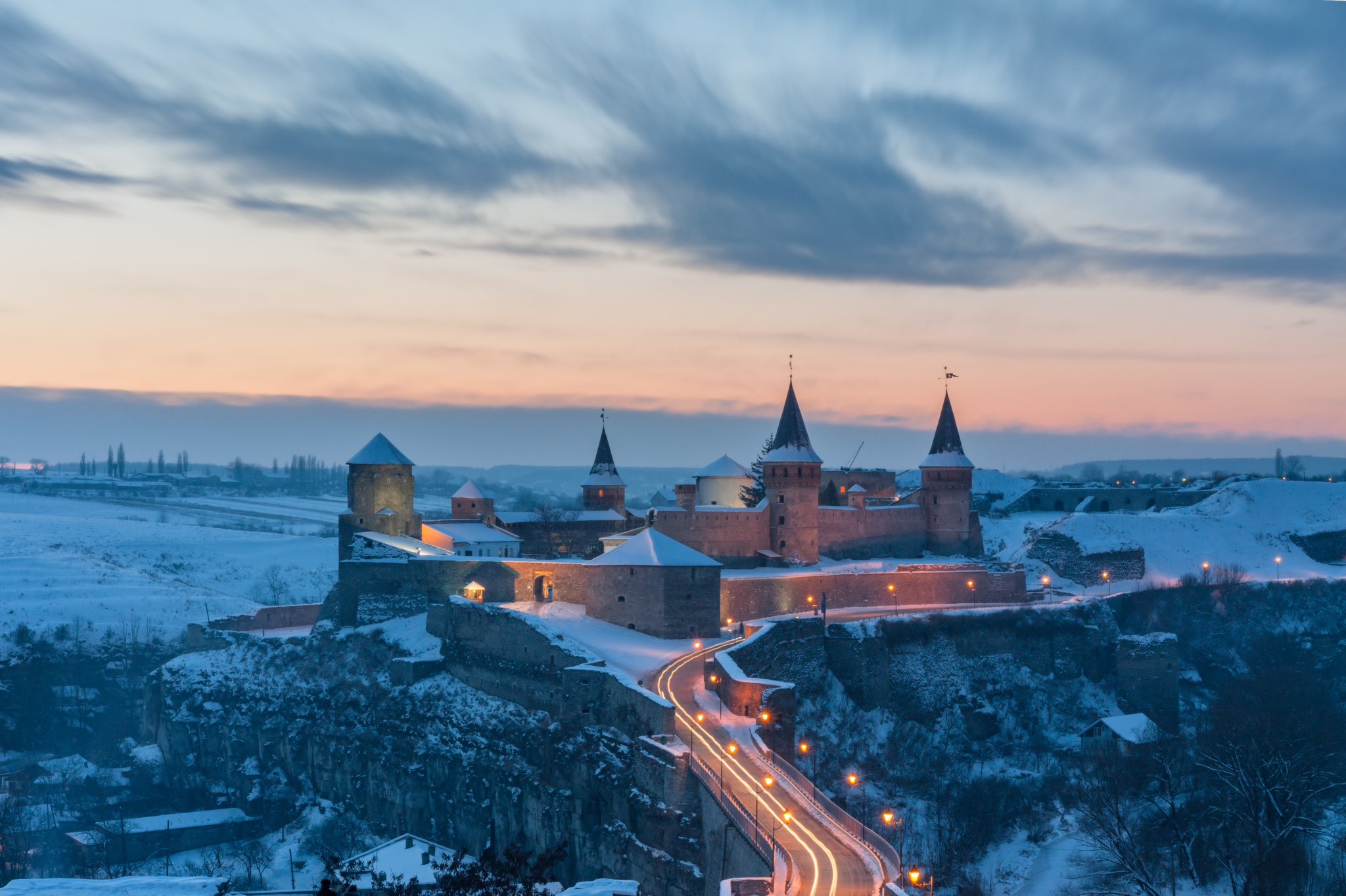
41. Kreuzenstein Castle, Leobendorf in Lower Austria
Burg Kreuzenstein is a castle near Leobendorf in Lower Austria, Austria. Burg Kreuzenstein is 265 metres (869 ft) above sea level. It was constructed on the remains of a medieval castle that had fallen into disrepair and was then demolished during the Thirty Years' War. Intended to be a family vault for the Wilczek family, it was rebuilt in the 19th century by Count Nepomuk Wilczek with money from the family's large Silesian coal mines.

42. Schwerin Castle, Mecklenburg-Vorpommern, Germany
Schwerin Castle also known as Schwerin Palace, is a 19th-century Schloss built in the historicist style located in the city of Schwerin, the capital of Mecklenburg-Vorpommern state, Germany. It is situated on an island in the city's main lake, Lake Schwerin.
For centuries, the castle on the present site was the home of the dukes and grand dukes of Mecklenburg and later Mecklenburg-Schwerin, although few parts of the pre-19th-century castle have survived.
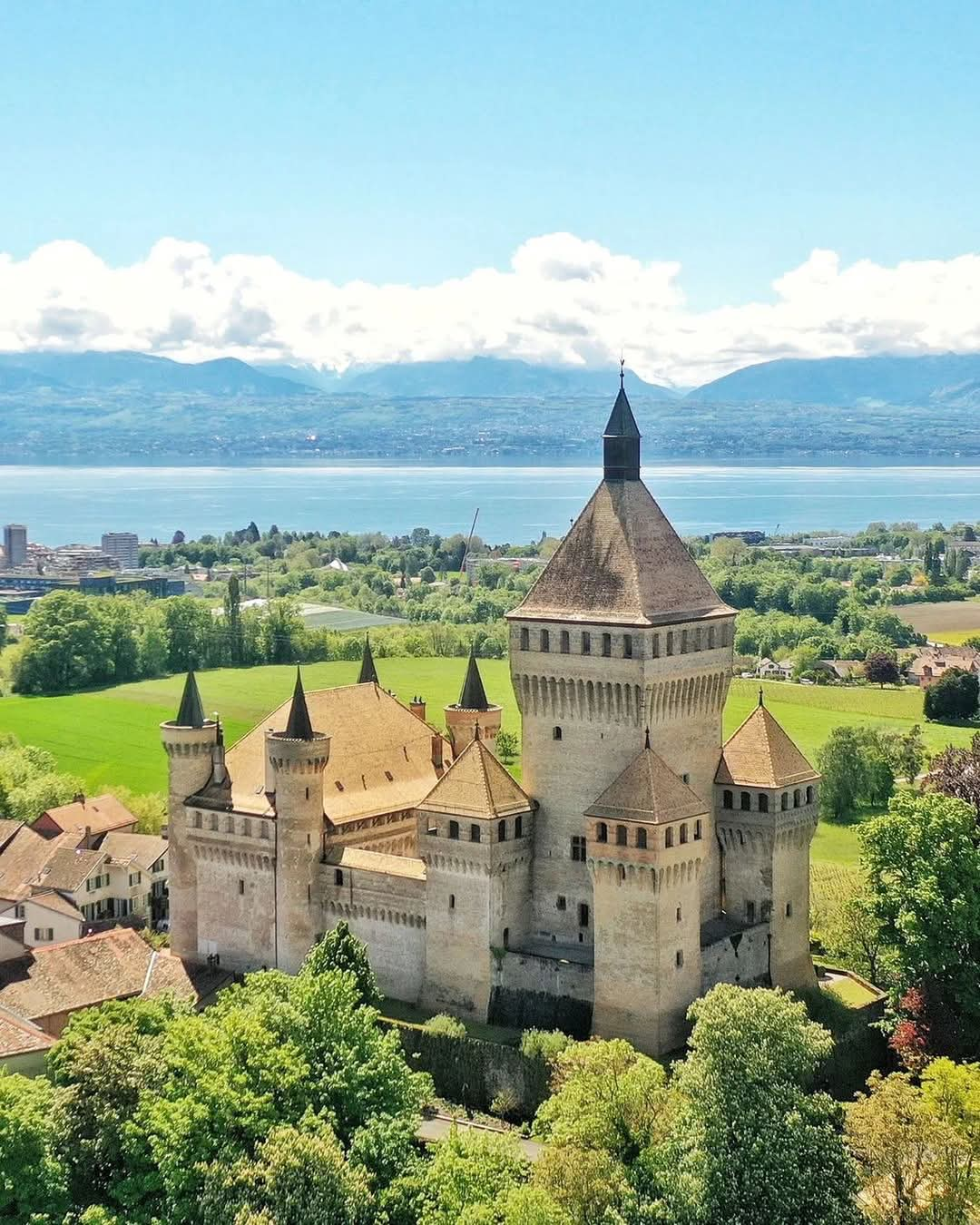
43. Vufflens Castle, Switzerland
Vufflens Castle is a medieval castle in the Swiss municipality of Vufflens-le-Château in the canton of Vaud. It is a Swiss heritage site of national significance.
The castle was built between 1420 and 1430 by Henri de Colombier, an advisor to Duke Amadeus VIII of Savoy, on the site of a previous medieval castle mentioned as early as 1108. In 1530, it was set on fire by Bernese troops. After the death of Philibert de Colombier in 1544, it passed through various owners, and in 1641 it was acquired by the de Senarclens family. The castle is privately owned.


44. Schloss Drachenburg, Königswinter, Nordrhein-Westfalen, Germany
Schloss Drachenburg or Drachenburg Castle is a private villa styled as a palace and constructed in the late 19th century. It was completed in only two years (1882–84) on the Drachenfels hill in Königswinter, a German town on the east bank of the Rhine, south of the city of Bonn. Baron Stephan von Sarter (1833–1902), a broker and banker, planned to live there, but never did.
The villa is owned by the State Foundation of North Rhine-Westphalia. It is served by an intermediate station on the Drachenfels Railway.


45. Reichsburg Cochem, Rhineland-Palatinate, Germany
The Reichsburg Cochem had its first documentary mention in 1130. In 1151, it was occupied by King Konrad III, who declared it an Imperial castle. In 1688, the castle was overrun by French King Louis XIV's troops in the course of the Nine Years' War (known in Germany as the Pfälzischer Erbfolgekrieg, or War of the Palatine Succession), and the following year, they destroyed it.
The castle complex long lay in ruins before in 1868 it was bought by the Berlin businessman Louis Fréderic Jacques Ravené for 300 Goldmark and then reconstructed in the Gothic Revival style. Since 1978 it has been owned by the town of Cochem and is administered by a company named Reichsburg GmbH.

46. Nuremberg Castle, Nuremberg, Bavaria, Germany
Nuremberg Castle is a group of medieval fortified buildings on a sandstone ridge dominating the historical center of Nuremberg in Bavaria, Germany.
The castle, together with the city walls, is considered to be one of Europe's most formidable medieval fortifications. It represented the power and importance of the Holy Roman Empire and the outstanding role of the Imperial City of Nuremberg.


47. The Castle of Vaux-le-Vicomte, France
The Château de Vaux-le-Vicomte or simply Vaux-le-Vicomte is a Baroque French château located in Maincy, near Melun, 55 km (34 mi) southeast of Paris in the Seine-et-Marne department of Île-de-France.
Built between 1658 and 1661 for Nicolas Fouquet, Marquis de Belle Île, Viscount of Melun and Vaux, the Superintendent of Finances of Louis XIV, the château was an influential work of architecture in mid-17th-century Europe. At Vaux-le-Vicomte, the architect Louis Le Vau, the landscape architect André Le Nôtre and the painter-decorator Charles Le Brun worked together on a large-scale project for the first time. Their collaboration marked the beginning of the Louis XIV style combining architecture, interior design and landscape design.


48. Arundel Castle, West Sussex, England
Arundel Castle is a restored and remodelled medieval castle in Arundel, West Sussex, England. It was established by Roger de Montgomery in the 11th century. The castle was damaged in the English Civil War and then restored in the 18th and early 19th centuries by Charles Howard, 11th Duke of Norfolk. Further restoration and embellishment was undertaken from the 1890s by Charles Alban Buckler for the 15th Duke.
Since the 11th century, the castle has been the seat of the Earls of Arundel and the Dukes of Norfolk. It is a Grade I listed building.

49. Mareta Castle. Vipiteno, Italy
Wolfsthurn Castle ( Italian: Castel Wolfsthurn or Castel Mareta ) is a Baroque castle complex on a hill above Mareit, a fraction of the municipality of Ratschings in South Tyrol . It was designed by Daniel Christoph Dietrich , but the person responsible for its construction is unknown.
The origins of the complex are obscure. Shortly after 1200, a fortified tower stood there , which the Counts of Tyrol acquired in 1242. They then granted it and the surrounding small lordship to Rudolfus Lupus ( Rudolf the Wolf ) as a fief . The ministeriale gave the tower its name. In 1464, with the death of Burkhart, the line of the Wolves of Mareit died out. In 1574, the castle at that time came into the possession of the Grebmer family.
About 200 years later, it passed to the Sternbach family , who still own it today. Between 1727 and 1741, Franz Andreas von Sternbach rebuilt it into the only Baroque castle in South Tyrol, after having the entire castle complex demolished, with the exception of the keep.


50. Bouzov Castle, Czech Republic
Bouzov Castle (Czech: Hrad Bouzov) is a castle in Bouzov in the Olomouc Region of the Czech Republic. It is located on a hill above the village of Bouzov, about 28 kilometres (17 mi) northwest of Olomouc. It was first mentioned in 1317.
Bouzov was established in the second half of the 14th century with the purpose to watch over the trade route from Olomouc to Loštice. The minor aristocratic Bůz of Bludovec family were its first recorded owners from 1317 to 1339. The castle also takes its name from the family. Ownership of the castles was then changed, and the Lords of Kunštát were among the most important medieval owners.


51. The Château de Vigny castle, Val d'Oise, France
The Château de Vigny is a château in the commune of Vigny, Val d'Oise, France. It was built in 1504 on the site of a mediaeval structure for Cardinal Georges d'Amboise, with substantial alterations in the 1880s in the troubadour style for its then owner, Comte Philippe Vitali, Prince of Sant'Eusebio. It was listed ("inscrit") as a monument historique in 1984.
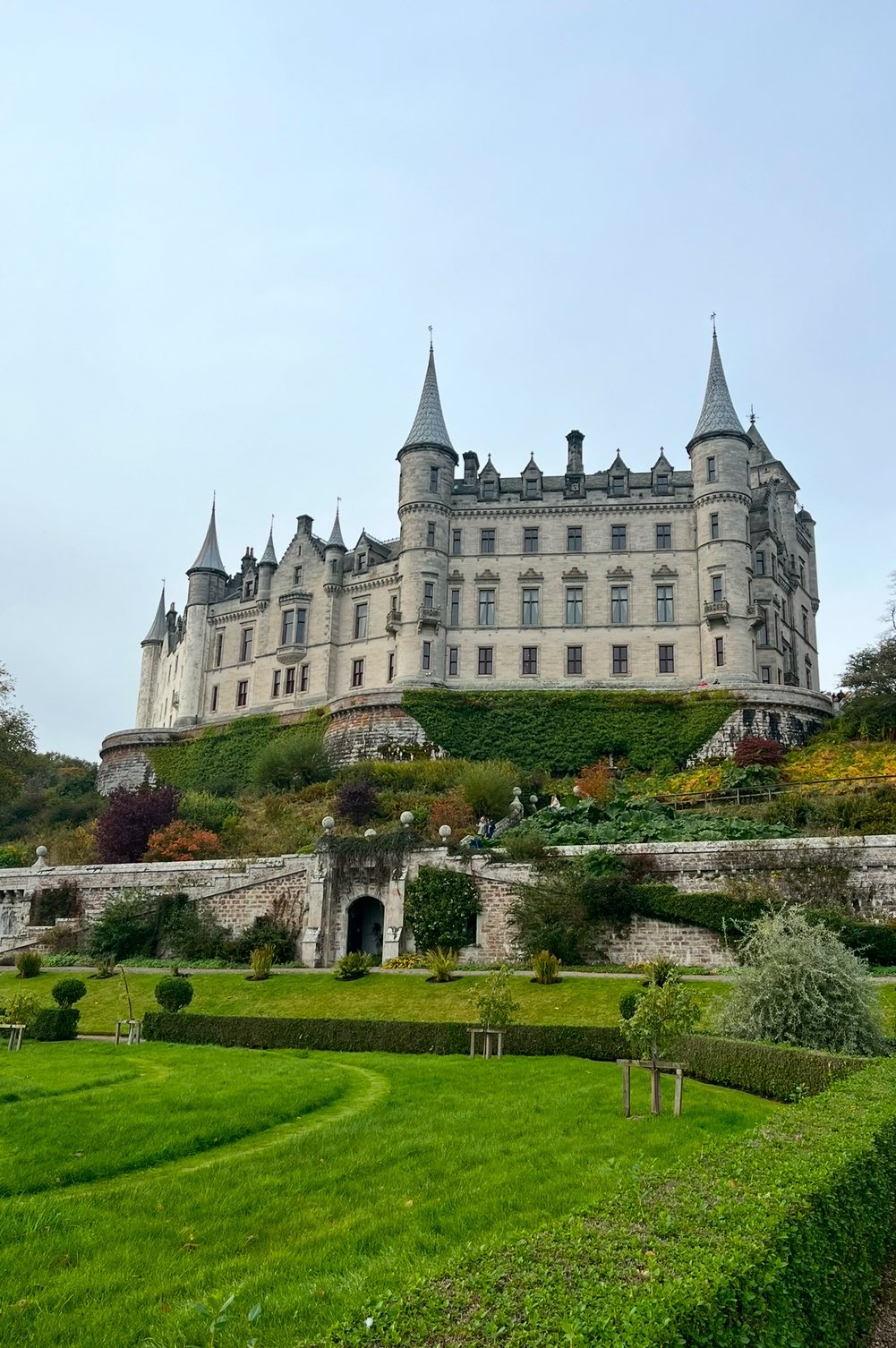
52. Dunrobin Castle, Golspie, Scotland
Dunrobin Castle is a stately home in Sutherland, in the Highland area of Scotland, that serves as the family seat of the Earl of Sutherland, Chief of Clan Sutherland. It is located one mile (1.5 kilometres) north of Golspie and approximately five miles (eight kilometres) south of Brora, overlooking the Dornoch Firth.
Dunrobin's origins lie in the Middle Ages, but most of the present building and the gardens were added by Sir Charles Barry between 1835 and 1850. Some of the original building is visible in the interior courtyard, despite a number of expansions and alterations that made it the largest house in the north of Scotland. After being used as a boarding school from 1965 to 1972, Dunrobin has been open to the public since 1973.

53. Drachenfels Castle, Königswinter, Germany
Schloss Drachenburg or Drachenburg Castle is a private villa styled as a palace and constructed in the late 19th century. It was completed in only two years (1882–84) on the Drachenfels hill in Königswinter, a German town on the east bank of the Rhine, south of the city of Bonn. Baron Stephan von Sarter (1833–1902), a broker and banker, planned to live there, but never did.
The villa is owned by the State Foundation of North Rhine-Westphalia. It is served by an intermediate station on the Drachenfels Railway.

54. Fenis Castle, Aosta (Italy)
Fénis Castle is an Italian medieval castle located in the town of Fénis. It is one of the most famous castles in Aosta Valley, and for its architecture and its many towers and battlemented walls has become one of the major tourist attractions of the region.
The castle first appears in a document in 1242 as a property of the Viscounts of Aosta, the Challant family. At that time it probably was a simple keep surrounded by walls. From 1320 to 1420, under the lordship of Aymon of Challant and of his son Boniface I of Challant, the castle was expanded to its actual appearance.

55. Akershus Fortress, Oslo, Norway
Akershus Fortress or Akershus Castle is a medieval castle in the Norwegian capital Oslo that was built to protect and provide a royal residence for the city. Since the Middle Ages the fortress has been the namesake and centre of the main fief and later main county of Akershus, which was originally one of Norway's four main regions and which included most of Eastern Norway. The fortress itself was located within the Akershus main county until 1919, and also within the smaller Akershus sub county until 1842.
The castle has also been used as a military base, a prison and is currently the temporary office of the prime minister of Norway.
It is not known exactly when the construction of the castle started but it is believed that it took place around the late 1290s, by King Haakon V, replacing Tønsberg as one of the two most important Norwegian castles of the period (the other being Båhus). It was constructed in response to the Norwegian nobleman, Earl Alv Erlingsson of Sarpsborg's earlier attack on Oslo that occurred in 1287.

56. Hochosterwitz Castle, Austria
Hochosterwitz Castle is considered one of Austria's most impressive medieval castles. It is on a 172-metre (564 ft) high dolomite rock near Sankt Georgen am Längsee, east of the town of Sankt Veit an der Glan in Carinthia. The rock castle is one of the state's landmarks and a major tourist attraction. It can be seen from a distance of up to 30 km (19 mi) on a clear day.
A settlement site since the Bronze Age, the rock was first mentioned in an 860 deed issued by Louis the German, King of East Francia, donating several of his properties in the former principality of Carantania to the Archdiocese of Salzburg. It was then named ‘Astarwiza’ It remained a Salzburg possession, until in the 11th century Archbishop Gebhard of Salzburg ceded the castle to the descendants of Count Siegfried of Sponheim in return for their support during the Investiture Controversy.

57. Château Frontenac, Québec City, Canada
The Fairmont Le Château Frontenac, commonly referred to as the Château Frontenac, is a historic hotel in Quebec City, Quebec, Canada. The hotel is situated in Old Quebec, within the historic district's Upper Town, on the southern side of Place d'Armes. The Château Frontenac was designed by Bruce Price, and was built by the Canadian Pacific Railway company. The hotel is managed by Fairmont Hotels and Resorts.
Opened in 1893, the Châteauesque-styled building has 18 floors; its 79.9-metre (262-foot) height is augmented by its 54-metre (177-foot) ground elevation. It is one of the first completed grand railway hotels, and was designated a National Historic Site of Canada in 1981. The hotel was expanded on three occasions, with the last major expansion taking place in 1993


58. Burghausen, Altötting, Bavaria, Germany
Burghausen Castle in Burghausen, Upper Bavaria, is the longest castle complex in the world (1051 m), confirmed by the Guinness World Record company, and the third largest. The castle is therefore also among the largest palaces in the world.
The castle hill was settled as early as the Bronze Age. The castle (which was founded before 1025) was transferred to the Wittelsbachs after the death of the last count of Burghausen, Gebhard II, in 1168. In 1180 they were appointed dukes of Bavaria and the castle was extended under Duke Otto I of Wittelsbach.


59. Eltz Castle, Wierschem, Rhineland-Palatinate, Germany
Eltz Castle is a medieval castle nestled in the hills above the Moselle between Koblenz and Trier, Germany. It is still owned by a branch of House of Eltz who have lived there since the 12th century. Eltz Castle has never been destroyed.
The castle stands on a 70-metre-high (230 ft) rock spur that is bounded on three sides by the river Elzbach, a tributary on the north side of the Moselle.
House of Eltz began work on castle on the Platteltz, a Romanesque keep, which was built on the site of the old manor hall. This remains the oldest part of the castle. By 1157 the fortress was an important part of the Holy Roman Empire under Frederick Barbarossa. It continued to protect the trade routes from the Moselle Valley and the Eifel region.


60. Stora Sundby Castle, Eskilstuna, Södermanland, Sweden
Stora Sundby Castle is a castle in Eskilstuna Municipality, Södermanland County, Sweden. The architectural features of the castle resemble those of a calendar, four large towers symbolizing the seasons, twelve small towers symbolizing the months of the year, 52 rooms symbolizing the weeks of the year, and a window for each day of the year (365). The architect was Peter Frederick Robinson.
The castle was used as the filming location for The Royal Palace in the Swedish teen drama Young Royals.