вторник, 20 января 2015 г.

Как правильно пить алкоголь

Пьяный, накачавшийся, в лоскуты — как это ни назови, а все пьющие люди проходят через один и тот же биологический процесс, приводящий к интоксикации.


Градация алкоголя по степени вредности

Пиво — на утро, а пока разберемся с чем покрепче. Мы расставили ваши любимые напитки в порядке увеличения их вредоносности.


Male tennis player reaching the top 10 in ATP rankings


пятница, 16 января 2015 г.

Spider has sex, then chews off own genitals

Male South-East Asian coin spider on the back of a female <i>(Image: Matjaz Kuntner)</i>
Male South-East Asian coin spider on the back of a female (Image: Matjaz Kuntner)


Species: Herennia multipuncta (South-East Asian coin spider)
Habitat: Tree trunks and walls across tropical South-East Asia
Sex for the male coin spider resembles war more than love.
First it must mate successfully with a female four times its size that would prefer to eat it than have its babies. Then, the male must do everything possible to keep eager rivals away from the impregnated female. In the macabre world of spider sex, this means self-emasculation.
That's right: coin spiders voluntarily bite off their own genitals. This habit, practised by around 30 spider species, is not the most obvious way to improve sexual performance. But according to Matjaž Kuntner from the Slovenian Academy of Sciences and Arts, eunuchs have an advantage over their intact neighbours.
For one thing, coin spiders only produce enough sperm for a single sexual adventure in their lifetime. So getting rid of the extra baggage - the two sperm-transferring organs known as palps, which can make up around a tenth of their bodyweight – after one use makes them leaner, meaner and better suited to holding off the advances of competing males.
Keeping other males away after mating with a female is particularly important for spiders as several males can fertilise the same batch of eggs. Only by sticking like glue to its mate can a male guarantee that the next generation will carry its genes.

Extreme monogamy

"It is an extreme form of monogamy. Males put all their eggs in one basket and focus on a single female," Kuntner says.
That is what Kuntner suspected, at any rate. He has previously showed with his collaborators that another species of spider that breaks off its genitals during mating – rather than biting them off afterwards - does it to become a more effective bodyguard. So Kuntner and his team set out to discover if this even more destructive behaviour could have similar benefits.
Individual males were given seven days to mate with a female. The researchers then compared the behaviour of eunuchs with spiders that had never mated.
They found that spiders that were lacking one or both sperm organs after mating were far more feisty than the rival males. The loss of their genitals seemed to give them an extra boost - an arachnid double espresso, if you will.
The eunuchs remained around 50 per cent closer to females and attacked rivals much more aggressively than their virgin competitors. They also stayed active for around 40 per cent longer compared with non-maters when harassed by a researcher's paintbrush, presumably because they did not have large palps weighing them down. Self-emasculation, it would appear, produces better bodyguards.
A close-up of the male - the whitish areas to the left and right are where the the sperm- transferring organs, or palps, used to be <i>(Image: Matjaz Kuntner)</i>

Eunuch aggression

Kuntner could not discount the possibility that the act of copulation itself was responsible for giving the spiders a boost – virgin males have little reason to want to protect the female. But he thinks that self-emasculation almost certainly increases the spider's motivation and aggression. When they only have one chance, they will do whatever it takes to stay ahead.
For the female, this possessive behaviour is actually against her interests, as having multiple mates allows for more varied offspring – which in turn increases the chances of the female's genes being passed on down generations. But then, she does try to eat the male, so a lasting relationship is hardly the first thing on either spider's mind.
Kuntner thinks that this very real danger of becoming lunch rather than lover was directly responsible for the evolution of self-emasculation. Coin spiders are much better off minimising their sexual encounters with hungry females, and so a one-off mating strategy becomes the most successful option.
This adaptation in turn drove the limited sperm production and the self-emasculating behaviour - although which of these traits came first is a chicken-and-egg question.

First anti-obesity electronic implant wins US approval

A tummy implant could zap those binges <i>(Image: Getty)</i>
by Clare Wilson

From crash diets to stomach-stapling and jaw-wiring, it seems there's nothing people won't try to lose weight. Soon you may even be able to have an implant, one that works by blocking signals between the stomach and the brain.
The device, called the Maestro Rechargeable System, has just been approved by the US Food and Drug Administration for people who are both severely obese – defined as those with a body mass index over 35 – and have a weight-related condition such as diabetes. Once fitted, it is recharged and adjusted wirelessly using an external controller. It is due to go on sale in the US later this year, with sales in other countries to follow.
The device doesn't seem to be the long-sought cure for obesity, though, as it leads to only modest weight loss – about 9 per cent. That compares with a 6 per cent weight loss in people who had a sham operation, in which the device was fitted but the electrodes were not connected.

Bypass or no?

"That's not a game changer," says Nick Finer of University College Hospital in London. If people are going to have surgery they would be better off having a gastric bypass, he suggests, which leads to greater weight loss. "It's extremely safe and durable."
However, obesity surgeon Scott Shikora, speaking for the device's manufacturer, EnteroMedics, says that some people dislike the idea of having their intestines "replumbed". "A lot of patients don't want the operations we are currently performing because they view them as being too risky or too radical," he says.
In a year-long trial of the Maestro system in 239 people, there were few serious side effects. But people who got the real implant were more likely to have indigestion, abdominal pain or nausea.
The company has not yet published the results of longer-term trials. But Shikora says one of these, smaller than the year-long study, suggests people's weight loss seems to plateau after about a year but is maintained for at least five years.

Vagus nerve

The signals blocked by the device travel along the vagus nerve, an important line of communication between the brain and several major organs. The electrodes wrap around the branch of the nerve connecting to the stomach. This contains both the neurons going from the stomach to the brain and those going back down to the stomach.
According to EnteroMedics, blocking this signalling pathway reduces stomach expansion and contraction, as well as the secretion of digestive enzymes. The net result is that people feel less hungry and their calorie intake is reduced.
"There's a treatment gap between diet and exercise and conventional surgery," says Shikora. "This would fit nicely between the two."
Other conditions can be treated by devices that stimulate the vagus nerve. A neck implant is used to reduce seizures in people with epilepsy, for instance, and a similar approach is being investigated to treat headaches, depression and tinnitus.

Learn Which Programming Language to Choose With This Infographic

Learn Which Programming Language to Choose With This Infographic

The 11 Coolest Cars From the Detroit Auto Show

From the spectacularly ludicrous Ford GT supercar, to the Chevy concept that could beat Tesla in the race to build a practical electric, to the bonkers Mercedes-Benz concept that imagines a future where humans are just passengers.


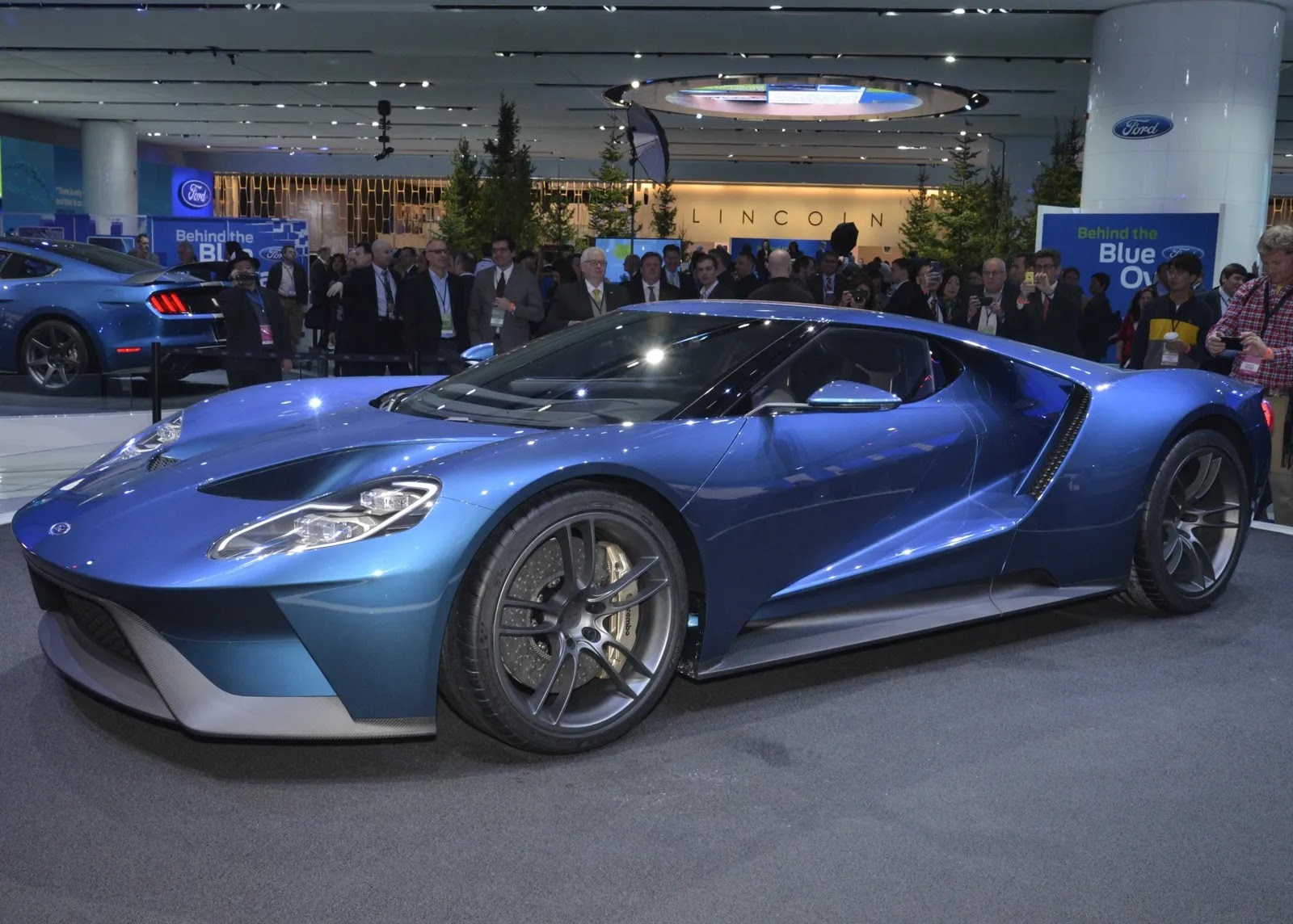
Ford GT Supercar
This is Detroit, so it’s no surprise Ford came out with a loaded bazooka. Behold the latest incarnation of the Ford GT, the third generation of the automaker’s supercar. Carbon fiber everywhere and a twin-turbo 3.5-liter V6 engine make us very, very excited.


Ford GT Supercar
We don’t have exact specs yet, but the twin-turbo will send more than 600 brake horsepower to the rear wheels, and styling that’s all about aerodynamics have us thinking this thing’ll easily hit the 200 mph mark.

2016 nissan titan xd
For the all-new 2016 version of the Titan, Nissan wanted to go from a “play truck” to “a true work truck,” design boss Diane Allen told Car and Driver. After going nearly a decade without major changes, the Titan has a longer and higher nose and boasts an “anatomical feel.”


2016 nissan titan xd
More important than the look is what’s under the hood: An optional 5-liter V8 turbo diesel engine that will crank out 310 horsepower and an impressive 555 pound-feet of torque, which is what you need for serious hauling—up to 12,000 pounds.


Acura NSX
At the dawn of the 1990s, the Acura NSX proved Honda could do over-the-top amazing as well as solid and reliable. In Detroit, we got our first look at the production version of the latest generation NSX, three years in the making.


Acura NSX
The name is a slightly belabored acronym for “New Sports eXperience,” and while the new look isn’t as striking as the original was 25 years ago, there’s a lot going for it. Power comes from a twin-turbocharged V6 engine with a 9-speed dual clutch transmission, which, unfortunately, you can’t shift yourself.


Alfa Romeo 4C Spider
We’ve gotten to know and love the Alfa Romeo 4C, and now we’ve been officially introduced to its baby brother, the 4C Spider. The topless version gets the same 240 horsepower as the coupe, but it’ll feel like a lot more when you can actually feel the wind rush by.


alfa romeo 4c spider
To keep the weight down, Alfa used 10 percent thinner glass for the windows and windshield, so the Spider comes in just 22 pounds heavier than the coupe.


Mercedes-Benz F 015 Luxury in Motion
Unveiled in Las Vegas at CES and then shown off in Detroit, the Mercedes-Benz F 015 Luxury in Motion is a old, completely bonkers vision of a future in which we become entirely optional behind the wheel.


Mercedes-Benz F 015 Luxury in Motion
The interior, with front seats that rotate to face the rear, creates a communal space. The vehicle is controlled through hand gestures, eye-tracking, and touchscreens. Everything has LEDs. When the car senses a pedestrian ahead, it can project a crosswalk onto the ground.


Buick Avenir Concept
“Buick made this?” We assume that’s what you’re thinking, because it’s the first thing that went through our minds, too. The Avenir—the French word for “future—is a sleek concept for a flagship sedan that’s a big step away from the Brand’s usual, un-astonishing and inoffensive fare.


2015-Buick-Avenir-Concept-017
Sitting on 21-inch wheels and powered by a direct-injected V6 engine, the Avenir is a vision of where Buick design could go, says GM design boss Ed Welburn. Please, please, go there.


Chevy Bolt Concept
The Chevy Bolt is a concept, yes, but a preview of a battery electric production car that GM CEO Mary Barra says will deliver more than 200 miles of range for a base price around $30,000 (after the obligatory $7,500 federal tax credit).


Chevrolet Unveils Bolt EV and Next -Generation Volt
It’s loaded with lightweight materials like aluminum, magnesium, carbon fiber, and, apparently, “woven mesh.” A lighter car requires less energy to propel, thereby increasing range. Vented rear fenders and an integrated rear spoiler help with aerodynamics, which also will boost range.


2016 Chevy Volt
On top of teasing us with the all-electric concept Bolt, Chevy brought the new, 2016 Volt to Detroit. Three years after putting the original Volt into production, the automaker took lesson learned and evolved technology and put them to use.


2016 Chevrolet Volt
Changes include a fifth seat (which still doesn’t look too comfortable) and a new two-motor drive unit that’s 12 percent more efficient and 100 pounds lighter than the original. The battery pack offers 18.4 kWh, and it’s 20 pounds lighter than its 400-pound predecessor.


Porsche 911 Targa 4 GTS
The 911 Targa, unveiled a year ago with its seemingly magical pop-top, was the most beautiful open-top 911 since the original Targa appeared in 1967. Porsche upped in Detroit with the 911 Targa 4 GTS, the long-awaited marriage of Targa style and the sharpened handling and performance of the company’s GTS models.


Porsche 911 Targa 4 GTS
You’ll want the seven-speed manual transmission, which comes standard. But if you can’t handle three pedals, get the double-clutch gearbox that changes gears in milliseconds. Letting the computer do the shifting for you shaves your zero to sixty time another three-tenths to a mere 4.1 seconds.


Jaguar F-Pace Teaser
Consumers are so obsessed with crossovers, even Jaguar is joining the trend. In Detroit, the brand known for sports cars and luxury sedans announced the F-PACE, which design director Ian Callum calls “our family sports car.”

Jag C-X17
The car will be built on a new platform shared by the XE sedan. It’s supposed to resemble the C-X17 concept, pictured here. Given the outstanding design work Callum has put in for the brand lately, it’s a safe bet it’ll come out looking good.


Tesla P85D
Tesla didn’t bring the Model X, its upcoming SUV model, to Detroit, but it did ship in the P85D, the dual-motor, extra powerful electric sedan it unveiled back in October.


Tesla P85D
Yes, we’ve seen it before, but it’s still one of the coolest cars you’ll find on the show floor. In addition to sending power to all four wheels, good for snowy climes, the system will boost the already impressive acceleration and the top speed. The P85D will get to 60 mph a full second faster than the current top of the line Tesla, the P85. It will max out at 155 mph instead of 130.

THE NORTH AMERICAN International Auto Show is the biggest event of the year for the American auto industry. It's the time when Ford, GM, Chrysler, and all the foreign brands that want to sell their cars here gather in Detroit to show off their best work. The fastest sports cars. The strongest pickup trucks. The most family friendly people haulers.

The show opens to the public this weekend, and everyone willing to spend $13 and suffer Detroit in the snow will be able to get up close to some of the newest and coolest cars on the planet. As usual, Cobo Hall is stuffed with more than 500 cars, so it's hard to know where to start.

To help guide you through the show, the biggest in the country, we've selected the 11 coolest cars on display. From the spectacularly ludicrous Ford GT supercar, to the Chevy concept that could beat Tesla in the race to build a practical electric, to the bonkers Mercedes-Benz concept that imagines a future where humans are just passengers, click through our gallery to see what's best in Detroit in 2015.

https://tinyurl.com/3bfabyas


SoloHealth is raising another $15M for its consumer biometric health kiosks

solo-station


Those sit-down-and-get-checked health kiosks you see in grocery and drug stores are becoming a thing.
SoloHealth‘s says its brand of the health kiosks are being used by 130,000 people every day. The kiosks are in 3,500 Walmart, Sam’s Club, and Safeway stores.
And now, according to a Securities and Exchange Commission filing, the company is raising another $15 million to add to the roughly $26 million its raised so far. The company has already raised $4.3 million, with more than $10 million to go.
SoloHealth is backed by WellPoint, Novartis, Dell, and Coinstar.
One new investor has already jumped in on this new round — Walter Huff, founder of the late, great health informatics company HBO & Company (acquired by McKesson).
SoloHealth’s unwieldy-looking kiosks measure the user’s blood pressure, vision, weight, and body mass index. The data is stored in the company’s cloud, and can be accessed online by the user.
The Atlanta-based company didn’t respond to requests for further information.